
Car Glass Coating Guide for Windshield Water Repellency
Car Glass Coating Guide for Clear Glass and Easier Rain Care
Rain starts while you are driving and water begins sitting across the windshield.
The wipers are working, but the glass still needs regular cleaning because dust, road film and water marks keep building up.
This is where car glass coating can be useful.
Car glass coating is a clear treatment made for compatible automotive glass. Once correctly applied, it changes how water behaves on the surface. Instead of spreading across the glass as easily, water tends to form droplets and move away more easily.
That does not mean the coating replaces your wipers.
It also does not mean the windshield will never need cleaning again.
The coating works best when the glass is properly cleaned, mineral deposits are removed and the product is applied according to its instructions.
The biggest difference often comes from preparation rather than simply applying more coating.
What Car Glass Coating Actually Does
Car glass coating creates a water repellent layer on compatible automotive glass.
Its main purpose is to change how water interacts with the surface.
After application, water can form smaller droplets instead of spreading into a wide sheet.
This can make routine glass care easier and may help water move away more easily during rainy driving.
Depending on the product, it may be suitable for
-
Windscreen
-
Side windows
-
Rear glass
-
Sunroof
-
Other approved automotive glass
Always check the product instructions before applying it to every glass surface.
Glass Coating and Normal Glass Cleaner Do Different Jobs
A glass cleaner and glass coating should not be treated as the same product.
Glass Cleaner
Used to remove
-
Dust
-
Fingerprints
-
Oily film
-
Light road dirt
-
Interior haze
Glass Coating
Used after the surface has been properly prepared.
Its job is to add a water repellent protective layer.
A coating should not be used to hide dirty glass.
The correct order is simple.
Clean first.
Coat later.
Why Windshield Preparation Matters So Much
A glass coating needs a clean surface.
If the windshield still has contamination, the coating may sit over that contamination instead of bonding evenly with the glass.
Before application, check for
-
Dust
-
Road film
-
Oil
-
Old rain repellent
-
Hard water marks
-
Mineral deposits
-
Cleaner residue
This is especially important on older windshields that have been through many washes.
The glass may look clean from a distance but still have a thin film on the surface.
The Simple Test Before Applying Glass Coating
After cleaning the windshield, inspect it under good light.
Look at it from different angles.
Check for
-
White water rings
-
Cloudy patches
-
Wiper marks
-
Greasy areas
-
Old product residue
Run your hand only when it is safe and appropriate to do so.
If the glass still has visible contamination, finish the preparation before coating.
Do not rush this step.
Remove Hard Water Spots Before Coating
This is a common mistake.
People sometimes apply glass coating directly over old mineral marks.
The coating does not make those deposits disappear.
If hard water spots are visible, deal with them before applying the coating.
For mineral related marks, use a suitable hard water spot remover for car according to the product instructions.
After removal, clean and inspect the glass again.
Do not apply coating until the surface is ready.
Why Hard Water Is Important for Indian Car Owners
Water quality can vary widely from one location to another.
Some users wash cars with municipal water.
Others may use tanker or borewell water.
When mineral rich water dries on automotive glass, visible marks can remain.
Hot weather can make the problem more noticeable because the water may dry quickly.
A glass coating does not make hard water harmless.
Good drying and regular maintenance are still important.
Car Glass Coating During the Monsoon
The monsoon is one reason many car owners become interested in hydrophobic glass treatments.
Rainwater on untreated glass can spread across the surface.
A water repellent coating changes that behaviour and encourages droplets to form.
When the car is moving, airflow may help some of those droplets move across the glass more easily.
But keep one thing clear.
Glass coating does not replace working windshield wipers.
Good wiper blades remain important.
The coating is an additional glass care treatment.
What Hydrophobic Glass Really Means
Hydrophobic simply means the surface resists water spreading easily.
You can see this when water forms rounded droplets on the glass.
People often call this water beading.
Strong beading can make the coating easy to notice after rain or washing.
But do not judge the complete condition of a coating from one droplet.
Dirt, oil and mineral buildup on top of the coating can also change water behaviour.
Clean the surface before deciding that the coating has completely failed.
Car Glass Coating and Ceramic Glass Coating
You may see both terms while shopping.
Some dedicated glass coatings use ceramic or silica based technology.
The exact formula depends on the manufacturer.
What matters more than the marketing name is whether the product is specifically approved for automotive glass.
Check
-
Surface compatibility
-
Application method
-
Curing instructions
-
Maintenance
-
Expected durability
-
Windshield use
Do not choose only because the bottle says ceramic.
Can You Use Paint Ceramic Coating on the Windshield
Not automatically.
A ceramic coating made for paint and a coating made specifically for glass can have different requirements.
Windshields also have to deal with repeated wiper movement.
That makes a dedicated glass coating a better starting point when the manufacturer specifically recommends it for automotive glass.
Always check the product instructions.
Do not assume one coating can be used on every vehicle surface.
Windshield Coating and Wiper Behaviour
A coating can change how the wiper moves across the windshield.
Most of the time, correct surface preparation and application are important for a clean result.
Problems can appear when
-
Glass was not properly cleaned
-
Old product residue remained
-
Too much coating was used
-
Coating residue was not levelled correctly
-
Wiper blades are dirty
-
Wiper blades are worn
This can lead to streaks, skipping or chatter.
If the problem appears after coating, do not immediately add another layer.
First inspect the glass and wiper blades.
Clean the Wiper Blades Too
The windshield is only one part of the system.
Dirty blades can move contamination across freshly cleaned glass.
Before or after coating, check the wipers.
Make sure the blades are
-
Clean
-
In good condition
-
Free from obvious dirt buildup
-
Moving correctly
Worn blades should be replaced when required.
A coating cannot fix a damaged wiper blade.
Where Car Glass Coating Can Be Applied
Depending on the product, suitable areas may include
-
Front windshield
-
Side windows
-
Rear window
-
Sunroof glass
-
Panoramic roof glass
-
Exterior mirror glass
Do not automatically apply it to
-
Interior displays
-
Camera lenses
-
Plastic screens
-
Tinted film
-
Unknown coated surfaces
unless the product manufacturer specifically allows it.
How to Prepare Car Glass Before Coating
A practical preparation process looks like this.
Step 1 Wash the Vehicle
Remove normal exterior dirt.
Step 2 Clean the Glass
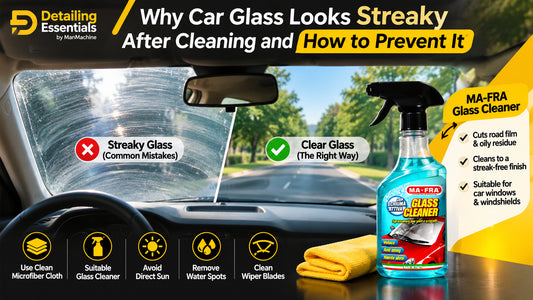
Use an automotive glass cleaner to remove film, fingerprints and light contamination.
Step 3 Check for Mineral Deposits
If water spots remain, remove them with a suitable product.
Step 4 Inspect the Glass
Look for residue, haze and old surface contamination.
Step 5 Deep Clean When Needed
Older or heavily contaminated glass may require additional preparation according to the coating instructions.
Step 6 Dry the Surface
The glass should meet the coating manufacturer's preparation requirements before application.
How Car Glass Coating Is Applied
Exact application changes from one product to another.
A general process may include
-
Clean and prepare the glass
-
Dry the surface
-
Apply a small controlled amount to the recommended applicator
-
Work in manageable sections
-
Spread the coating evenly
-
Allow it to react for the stated time
-
Level or buff the residue as instructed
-
Keep the glass away from water during the required initial curing period
Do not copy timing from another coating.
The product label should always take priority.
Why More Product Is Not Better
Applying a thick layer does not automatically give stronger protection.
Too much product can make it harder to level the coating.
It may also leave
-
Haze
-
Streaks
-
Uneven areas
-
High spots
Use the amount recommended by the manufacturer.
Good preparation and even application matter more than using extra products.
Common Signs of Poor Glass Coating Application
A newly coated windshield should not be left with obvious visual problems.
Check for
-
Haze
-
Smearing
-
Uneven patches
-
Heavy residue
-
Wiper chatter
-
Visible streaks
If these appear, follow the coating manufacturer's correction instructions.
Do not repeatedly polish or add more coating without identifying the cause.
Car Glass Coating and Water Spots
A glass coating can make glass easier to maintain.
But it cannot guarantee that water spots will never form.
If mineral rich water is allowed to dry repeatedly, deposits may still build up on the treated surface.
A better routine is
-
Rinse properly
-
Dry the glass
-
Remove fresh mineral deposits early
-
Use suitable maintenance products
-
Avoid letting wash water dry in strong heat
Coating helps with maintenance.
It does not replace maintenance.
How Long Car Glass Coating Lasts
There is no single durability period for every product.
Performance depends on
-
Product formula
-
Preparation
-
Application
-
Windshield wiper use
-
Cleaning chemicals
-
Weather
-
Vehicle parking
-
Driving frequency
-
Maintenance
The front windshield can experience more mechanical wear than side glass because the wipers repeatedly move across it.
Use the manufacturer's durability and maintenance guidance for the coating you choose.
How to Know When the Coating Needs Attention
Do not reapply automatically because water beading looks slightly weaker.
First clean the glass properly.
Sometimes contamination builds over the coating and changes water behaviour.
After cleaning, look again.
You may consider maintenance or reapplication when
-
Water behaviour remains weak
-
Cleaning has not restored performance
-
The manufacturer recommends reapplication
-
Coating performance has become uneven
How to Maintain Coated Car Glass
Good maintenance is simple.
Clean the Glass Regularly
Do not let road film build up for months.
Keep Wipers Clean
Dirty wipers can leave streaks.
Avoid Rough Scrubbing
Do not use abrasive household pads.
Remove Mineral Deposits Early
Hard water marks are easier to manage when they are fresh.
Follow Product Care Instructions
Some coatings have specific maintenance recommendations.
Car Glass Coating for Cars Parked Outdoors
Cars parked outside may collect
-
Dust
-
Rain residue
-
Bird contamination
-
Road film
-
Water deposits
Glass coating can make routine cleaning easier, but regular maintenance is still needed.
A heavily contaminated windshield will not stay clear simply because it has been coated.
Car Glass Coating for City Driving
City vehicles often deal with dust, pollution and frequent windshield cleaning.
For these cars, coating can be useful when the owner wants easier water removal and simpler exterior glass maintenance.
But the result depends on the windshield being kept clean.
The coating should be treated as part of a maintenance routine, not a one time fix.
Is Car Glass Coating Worth It
It can be useful for drivers who
-
Regularly drive in rain
-
Want stronger water repellency
-
Maintain the car regularly
-
Have properly prepared automotive glass
-
Want easier exterior glass cleaning
It may offer less value when
-
Glass is heavily contaminated and never prepared
-
Wiper blades are in poor condition
-
The owner does not maintain the windshield
-
The product is being applied to an unsuitable surface
The value depends on the condition of the glass and how the car is used.
DIY Car Glass Coating
DIY application can make sense when
-
The glass is in good condition
-
Preparation is straightforward
-
Product instructions are clear
-
You have a clean place to work
-
You can control application and curing
Do not rush the preparation stage.
The coating step may be quick.
Cleaning the glass properly can take longer.
When Professional Application Makes More Sense
Professional help can be useful when
-
The windshield has heavy mineral deposits
-
Old coating needs removal
-
Wiper marks are present
-
Glass needs polishing
-
You are unsure about surface preparation
-
The vehicle has expensive or unusual glass
A professional detailer can inspect the glass before deciding whether cleaning, polishing or coating is needed.
How to Choose the Right Car Glass Coating
Start with the surface.
Then look at the product.
Check
-
Is it made for automotive glass
-
Can it be used on the windshield
-
What preparation is required
-
How is it applied
-
How long does it need before water exposure
-
What maintenance does it need
-
Is it suitable for DIY or professional use
-
What does the manufacturer say about durability
Do not choose only from the longest durability number on the bottle.
Car Glass Coating Products at Detailing Essentials
Detailing Essentials has a dedicated car glass coating products collection for exterior glass and related protection work.
The live collection includes Maniac Rainspeed Glass Coating along with headlight care products.
Choose the product according to the surface and intended use.
Check the individual product page for preparation, application and maintenance instructions before use.
Simple Buying Checklist
Before ordering a glass coating, ask
-
Is my glass properly clean
-
Are hard water spots still present
-
Is the product made for automotive glass
-
Is it approved for windshields
-
Do I need glass polishing first
-
Are my wiper blades in good condition
-
Can I keep the glass dry during initial curing
-
Am I comfortable applying the coating evenly
-
How will I maintain it later
-
Do I need a DIY product or professional application
If these questions are clear, choosing the product becomes much easier.
Mistakes That Reduce Glass Coating Results
Applying Over Water Spots
Remove mineral deposits first.
Applying Over Oily Glass
Clean the surface properly.
Using Too Much Product
Follow the recommended amount.
Ignoring the Wipers
Dirty blades can affect the finished result.
Using Paint Coating Without Checking Compatibility
Use products approved for glass.
Allowing Water Too Soon
Follow the initial curing instructions.
Expecting Zero Maintenance
Coated glass still needs cleaning.
Final Thoughts
A car glass coating can be useful when you want water to move across exterior automotive glass more easily and you want routine cleaning to be simpler.
But the coating itself is only one part of the job.
The glass needs to be prepared properly first.
Remove dirt.
Remove oily film.
Deal with hard water deposits.
Check the wipers.
Then apply the coating according to the product instructions.
A simple process works well.
Clean the glass
Remove contamination
Inspect the surface
Apply the coating
Allow it to cure
Maintain the glass
Good preparation makes more sense than applying more products.
FREQUENTLY ASKED QUESTIONS
Does car glass coating replace windshield wipers
No. Glass coating can help water form droplets and move away more easily, but working windshield wipers are still important.
Can ceramic coating be used on car glass
Only when the coating manufacturer approves it for automotive glass. A dedicated glass coating is generally designed specifically for that surface.
Can glass coating stop hard water spots
It cannot guarantee that mineral deposits will never form. Hard water should still be dried and mineral buildup should be removed when needed.
Should water spots be removed before coating
Yes. The glass should be properly prepared before coating. Existing mineral deposits should be removed first.
How long does car glass coating last
Durability depends on the product, preparation, wiper use, weather, cleaning and maintenance. Follow the individual manufacturer's guidance.
Why do wipers chatter after glass coating
Possible causes include dirty or worn blades, poor glass preparation, excess coating residue or uneven application. Inspect both the glass and wiper blades before adding more product.
टैग:
पिछला
Hard Water Spot Remover for Car That Helps Remove Mineral Marks
अगला
Why Car Glass Looks Streaky After Cleaning and How to Fix It