
Car Plastic Protectant Guide for Faded Car Plastic
Why Car Plastic Fades and How to Protect Interior and Exterior Trim
Car plastic does not stay new forever. After some time, the dashboard, door panels and outside black trim can start looking dull or grey. Sunlight, heat, dust, rain and regular washing can slowly change the look of plastic.
A car plastic protectant can help keep suitable plastic looking fresh after cleaning. But it should be used in the right way. First clean the surface, let it dry and then apply a small amount of protectant.
Detailing Essentials offers plastic care, interior cleaning and detailing products for home users and professional detailers. This guide explains everything in simple words so you can understand what to use and how to use it.
Quick Answer
Car plastic can fade because of sunlight, heat, dirt, old polish and normal ageing. First clean the plastic properly and let it dry. Then use a car plastic protectant that is suitable for that surface.
Do not apply too much product. A thick layer can make the dashboard or trim look oily and sticky. A thin and even layer usually gives a cleaner result.
Why Does Car Plastic Fade
Car plastic faces heat, sunlight, dust and dirt every day. Interior plastic gets hot when the car is parked in sunlight. Exterior plastic also gets rain, road dirt and regular washing.
Over time, black plastic can start looking grey, dry or dull. This is common on dashboards, door panels, bumpers and mirror trim.
Sometimes the plastic is not badly faded. It may only have old polish, wax marks or dirt on it. So always clean the surface first before deciding that it needs protection.
What Is a Car Plastic Protectant
A car plastic protectant is a product used after cleaning the plastic. It can help improve the look of dull plastic and keep the surface looking better for longer.
You can check a suitable Car Plastic Protectant at Detailing Essentials. Always read the product instructions before using it.
A protectant is not the same as a cleaner. If the plastic is dirty, clean it first.
Car Plastic Cleaner and Plastic Protectant Are Different
A plastic cleaner removes dust, dirt, fingerprints and old product. A plastic protectant is used after cleaning to give the surface a better finish and protection.
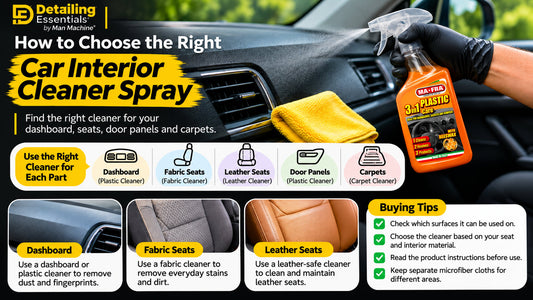
If your dashboard or door panel is dirty, first use a suitable Car Interior Cleaner. Wipe the dirt away and let the surface dry.
Do not apply protectant on top of dirt. The surface may look dark for some time, but the dirt will still be there.
Why Cleaning First Is Important
Clean plastic gives a better result. If dust or old polish is still on the surface, the protectant may look patchy or uneven.
Use a clean microfiber towel or a soft brush to remove loose dust. If the surface is very dirty, use a cleaner made for car interiors.
Once the plastic is clean and dry, you can check if it really needs protectant.
Interior Plastic and Exterior Plastic Need Different Care
Interior and exterior plastic may look the same, but they face different conditions. Dashboard plastic stays inside the car, while outside trim gets direct sun, rain and road dirt.
This is why one product may not be suitable for every area. Some products are made only for interior plastic. Others can also be used on outside trim.
Always check the label before using the product.
How to Protect Dashboard Plastic
First clean the dashboard properly. Remove dust, fingerprints and old polish. Let the surface dry before applying anything.
You can check the Dashboard Care range at Detailing Essentials for products made for dashboard and interior care.
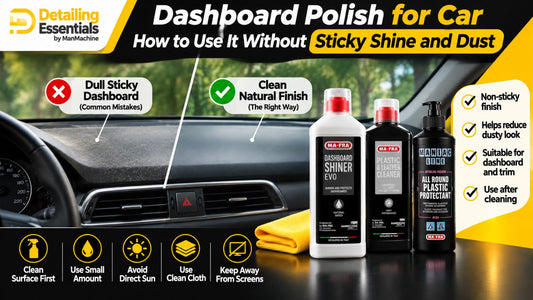
Use only a small amount of protectant. A natural or light finish is usually better than a very shiny one because too much shine can reflect on the windshield.
How to Protect Door Panels
Car door panels can have plastic, leather and fabric in the same area. So first check which material you are cleaning.
Use plastic protectant only on plastic parts if the product is suitable for them. Leather and fabric need different products.
Taking a little time to check the material can help you avoid stains and uneven marks.
How to Care for Exterior Black Plastic
Outside black plastic can slowly turn grey because of sunlight, rain and road dirt. This can happen on bumpers, mirror bases and black trim.
First wash and clean the plastic. Let it dry fully. Then use a protectant only if the product is suitable for exterior plastic.
Apply a thin layer. Too much product can make the trim look oily.
Why Black Plastic Turns Grey or White
Grey or white marks on black plastic do not always mean the plastic is damaged. Sometimes old wax, dried polish or dirt makes the trim look faded.
Clean a small area first. If the black colour comes back after cleaning, the problem was mainly dirt or old product.
If the plastic still looks dull after cleaning, a suitable protectant may help improve the look.
Can Car Plastic Protectant Restore Faded Plastic
A car plastic protectant can improve the look of some faded plastic. It may make the surface look darker and more even.
But it cannot repair cracked or badly damaged plastic. If the material is broken, peeling or very worn, a protectant will not make it new again.
This is important because no car care product can fix physical damage.
Why Too Much Protectant Looks Greasy
Using more product does not mean better results. A heavy layer can make the surface look wet, sticky or oily.
On dashboards, this can also make dust more visible. Fingerprints may also show more easily.
Start with a small amount and spread it evenly. If there is extra product, wipe it with a clean microfiber towel.
Should Car Plastic Look Matte or Shiny
Car plastic does not need to look very shiny to look clean. Many people prefer a natural or satin finish because it looks closer to the original car interior.
A very glossy dashboard can show dust and fingerprints more easily. It can also create reflection on the windshield in bright sunlight.
Choose a finish that looks clean and natural.
Why Plastic Protectant Can Attract Dust
Dust becomes more visible when too much oily product is left on the surface. This is common when protectant is applied in a thick layer.
If the dashboard feels sticky, there may be too much product on it. Wipe the extra product away with a clean cloth.
For dusty cities, a light finish is easier to maintain.
Can Plastic Protectant Be Used on the Steering Wheel
Do not use a product that makes the steering wheel slippery. The steering wheel needs good grip while driving.
If it needs cleaning, use a cleaner that is safe for the material.
Always keep driving controls clean and non-slippery.
Can Plastic Protectant Be Used on Pedals
Do not apply slippery products on brake, clutch or accelerator pedals. These areas need grip.
If any product reaches the pedals by mistake, clean them properly before driving.
Safety is more important than shine.
Can Plastic Protectant Be Used on Touchscreens
Do not use normal plastic protectant on touchscreens unless the product clearly says it is safe for screens.
Modern screens can have special coatings. Oily products can also leave marks and fingerprints.
Use a screen-safe cleaner for infotainment and display screens.
Why a Clean Microfiber Towel Matters
A dirty towel can move dust, oil and old polish from one area to another. This can make the final finish look uneven.
Use a clean Microfiber Towel for Car Cleaning for dashboard and plastic work.
Keep wheel towels and very dirty towels separate from interior towels.
Why a Soft Detailing Brush Helps
Dust can stay inside air vents, switches and small gaps. A microfiber towel may not reach these areas easily.
A soft Car Detailing Brush can help remove this dust. Use gentle pressure.
Do not use a hard brush on screens or glossy trim.
Should You Apply Protectant Over Old Dashboard Polish
It is better to clean old polish first. Adding new product on top of old product can make the surface sticky and uneven.
Clean a small area and remove the old layer. Once the plastic is clean and dry, apply a fresh thin layer if needed.
This gives a much cleaner result.
How Often Should Car Plastic Protectant Be Applied
There is no fixed rule for every car. It depends on sunlight, heat, washing, dust and the product you use.
Check the surface first. If it still looks clean and even, you may not need to apply more product.
Follow the product instructions for reapplication.
Car Plastic Care During Indian Summer
Indian summer can make car interiors very hot. Dashboards and door panels can stay under strong heat for many hours.
Try to clean and protect plastic in shade. Let the surface cool before applying any product.
A thin and even layer is easier to manage than a heavy coating.
Car Plastic Care During Monsoon
During monsoon, outside plastic can collect mud, dirty water and road grime. Clean the surface and let it dry before applying protectant.
Inside the car, do not apply product over damp or dirty plastic.
Clean and dry plastic always gives a better result.
Car Plastic Care in Dusty Cities
Cars used in Delhi, Noida, Ghaziabad and other busy cities can collect dust very quickly. A greasy dashboard can make this dust look even worse.
Use a light finish and clean the dashboard regularly with a soft microfiber towel.
Do not apply more protectant every time you see dust. Dust needs cleaning, not more dressing.
Car Plastic Protectant for Professional Detailers
Professional detailers should first check the material before applying any product. Plastic, leather, fabric and screens should not all get the same treatment.
For a detailing studio or car wash franchise, a simple process can help workers give better and more consistent results. First clean the surface, then check the material, then apply the correct product.
This also helps reduce product waste.
What to Check Before Buying Car Plastic Protectant
First decide where you want to use the product. Dashboard plastic and exterior trim may need different types of protectant.
Check the product label for approved surfaces. Also check the finish, application method and whether it is made for interior or exterior use.
Detailing Essentials offers different plastic and interior care products, so choose according to the surface you want to treat.
Common Car Plastic Care Mistakes
One common mistake is applying protectant over dust. Another is using too much product and making the surface oily.
People also sometimes use the same product on dashboards, screens, leather and steering wheels without checking if it is safe.
The simple rule is clear. Clean first, check the surface and use only the right amount of product.
Simple Car Plastic Care Routine
Start by removing loose dust with a clean microfiber towel or soft brush. If the plastic is dirty, use a suitable cleaner and wipe the surface properly.
Let the plastic dry. If it still looks dull and the protectant is suitable, apply a small amount and spread it evenly.
Check the finish. If there is extra product, wipe it away with a clean towel.
Car Plastic Care Products at Detailing Essentials
Detailing Essentials offers dashboard care, interior cleaners, microfiber towels, brushes and plastic protection products for DIY users and professional detailers.
You do not need many products for every job. Start with cleaning and add protectant only when the surface needs it.
Using the correct product for the correct surface is more important than using many products.
Final Thoughts
A car plastic protectant can help keep suitable plastic looking clean and fresh, but it works best on a clean surface. Do not use it as a replacement for cleaning.
The simple process is easy to follow. Clean the plastic, let it dry, apply a small amount and wipe away any extra product.
For Indian heat, dust and monsoon weather, regular cleaning and light product use can make car plastic care much easier. The goal should be clean and natural-looking plastic, not too much shine.
Frequently Asked Questions
What Is Car Plastic Protectant Used For
Car plastic protectant is used after cleaning to help keep suitable car plastic looking fresh and well maintained.
Can Car Plastic Protectant Fix Faded Plastic
It can improve some dull plastic, but it cannot repair cracked or badly damaged plastic.
Should I Clean Plastic Before Applying Protectant
Yes. Always remove dust, dirt and old polish before applying protectant.
Can I Use the Same Protectant Inside and Outside the Car
Only if the product says it is safe for both areas. Always check the label first.
Why Does My Dashboard Feel Sticky After Using Protectant
You may have used too much product or applied it over old polish and dirt. Clean the area and use a thinner layer.
How Often Should I Apply Car Plastic Protectant
Apply it when needed and follow the product instructions. You do not need to use it every week if the surface still looks good.
टैग:
पिछला
Dashboard Polish for Car How to Use It Without Sticky Shine and Dust
अगला
Car Air Blower vs Microfiber Towel for Car Drying