
Why Car Glass Looks Streaky After Cleaning and How to Fix It
Why Car Glass Looks Streaky After Cleaning and How to Prevent It
You wipe the windshield. You put in the effort. You step back, and the glass looks worse than before. Smears, hazy lines, and rainbow-like marks show up the moment the sun hits it.
If this has happened to you, you are not alone. Many car owners have faced the same problem. The good news is that streaks usually have clear causes, and once you know them, car glass cleaning becomes much easier.
Car glass usually looks streaky after cleaning because of dirty microfiber cloths, too much cleaner, hot glass, hard water deposits or oily residue. To prevent streaks, clean cool glass with a suitable automotive glass cleaner, use one clean microfiber cloth for wiping and another for drying, and check the glass from different angles.
In this guide, we will explain why car glass looks streaky after cleaning, what you can change today, and how to keep your windows clear for longer. You will get practical car glass cleaning tips in simple words, so you can follow along even if you have never detailed a car before.
What Are Streaks?
A streak is usually leftover material on the glass. It can be dirt, oil, cleaner residue or water minerals that were not fully removed. When you wipe, you may spread this material into a thin layer instead of lifting it away. That layer scatters or changes how light passes through the glass, which is why you notice lines and haze, especially in sunlight or at night.
So the real question is simple: what is being left behind, and why? Let's look at the most common reasons.
7 Reasons Your Car Glass Looks Streaky After Cleaning
1. Your Cloth Is Dirty or Wrong for the Job
This is one of the most common causes. A cloth that already holds dust, wax or old cleaner will move dirt around instead of removing it. Old kitchen towels, newspaper and cotton rags may also leave tiny fibres behind. Paper towels can leave lint, and rubbing trapped grit against the glass can cause fine scratches.
A clean, soft microfiber cloth made for glass helps pick up dirt and moisture instead of pushing it around. We cover this in more detail later in the section about choosing the right cloth.
2. You Are Cleaning in Direct Sun
Hot glass dries the cleaner too quickly. Before you can wipe it away, the liquid may leave a thin film behind. That film becomes visible as streaks.
In a city like Delhi, a windshield parked in the summer sun can become very hot, making car glass cleaning more difficult.
Always clean in the shade, or early in the morning or evening, when the glass is cool.
3. You Are Using Too Much Product
More cleaner does not mean cleaner glass. Too much liquid can be difficult to remove completely, and whatever stays behind may dry as a haze.
Start with a small amount of cleaner on your cloth. Add more only when needed, following the product instructions.
4. You Are Using the Wrong Cleaner
Household glass cleaners are usually made for windows and mirrors at home. Car glass faces different types of dirt, including road film, bug splatter and tree sap. Some vehicles also have aftermarket window tint or protective coatings.
Certain household cleaners contain ammonia or other ingredients that may not be suitable for some window films or nearby materials.
Dish soap can also leave residue if it is not rinsed away properly. Plain water may remove loose dust, but it may not remove oily road film effectively.
A suitable automotive glass cleaner is designed to remove common glass contamination without leaving unnecessary residue when used correctly.
5. Hard Water Is Leaving Mineral Spots
If you wash your car with tap water and let it air dry, dissolved minerals can remain on the glass as white spots or cloudy marks.
Hard water is a common problem in many parts of India. If mineral deposits have already formed, ordinary glass cleaner may not remove them completely.
Dry the glass with a clean microfiber cloth soon after rinsing. For stubborn mineral spots, use a suitable automotive glass water spot remover according to its instructions.
6. There Is an Oily Film on the Glass
This one surprises people. Oil and silicone can reach your glass from several sources:
-
Dashboard shine or protectant spray that lands on the windshield
-
Wax or polish that touches the glass during paint detailing
-
Road grime, smoke and fingerprints
-
Residue from interior materials that gradually collects on the inside of the windshield
An oily film can make cleaning products smear instead of wiping away cleanly. If the streaks keep returning after repeated wiping, oily contamination may be the reason.
7. You Skipped the Pre-Wash
If the car is covered in dust and you go straight to wiping the glass, you may drag grit across the surface. This can leave scratches or dirty marks.
For heavily soiled exterior glass, rinse away loose dirt before using a cloth. This reduces the chance of rubbing grit against the surface.
What You Need for Streak-Free Car Glass Cleaning
You do not need a lot of tools. You just need a few suitable products.
-
A good car glass cleaner made for automotive use
-
Two clean microfiber cloths, one for cleaning and one for drying and buffing
-
A bucket and clean water for the exterior pre-wash and rinse
-
A little car shampoo if the exterior glass is heavily soiled
-
A soft detailing brush or suitable tool for cleaning edges and corners
If you already wash your car at home, you may have most of these items. You do not need a large number of car glass cleaning products. A small, well-chosen kit is usually enough.
If you are building a cleaning kit from scratch, explore our range of car wash chemicals for regular vehicle cleaning.
The Right Cloth Matters More Than You Think
People spend a lot of time choosing a cleaner and very little time choosing a cloth. But the cloth can make a big difference.
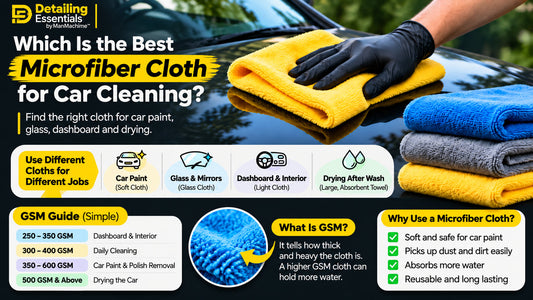
A good microfiber cloth for car glass cleaning helps remove dirt and cleaner residue without leaving visible lint.
Here is what to look for:
-
Short, tight weave: Long, fluffy cloths work well for many paint-cleaning tasks but may leave fibres on glass. A short-pile or suitable glass-weave microfiber cloth is often a better choice.
-
Clean and lint-free: Keep your glass cloths separate from paint and wheel towels. Avoid fabric softener because it can leave residue on the fibres.
-
One for cleaning, one for drying: Use one cloth to apply and wipe the cleaner, then a second clean, dry cloth to remove the remaining moisture.
You can explore suitable options in our microfiber towels collection. Keeping a separate set of towels for glass can help you get more consistent results.
How to Clean Car Glass Without Streaks: Step by Step
Follow this simple method for windshields, side windows and rear glass. Check the cleaner's compatibility with aftermarket tint and any existing glass coating before use.
Step 1: Park in the Shade
Make sure the glass is cool before cleaning. If the car has been parked in direct sunlight, allow the surface to cool first.
Step 2: Rinse Off Loose Dirt
For exterior glass, use clean water to rinse away dust and grit. If you have a foam gun or sprayer, you can use it as part of your regular exterior pre-wash.
Removing loose dirt before wiping helps reduce the risk of scratches.
Step 3: Wash Heavily Soiled Glass
If the exterior glass has bugs, road grime or heavy dirt, wash it first with properly diluted car shampoo and a clean wash mitt.
Rinse thoroughly. Leftover shampoo can cause streaks when it dries.
Step 4: Spray the Cloth, Not the Glass
This simple tip helps you control the amount of cleaner.
Spray a small amount onto a clean microfiber cloth instead of spraying directly onto the window, especially when cleaning interior glass.
This also helps reduce overspray on the dashboard, trim and nearby surfaces.
Step 5: Wipe in One Direction
Wipe the outside glass in straight lines, from side to side. Wipe the inside glass up and down. This is a useful trick because the direction of a remaining streak can help you identify which side needs another wipe.
Step 6: Buff With the Dry Cloth
Take your second clean microfiber cloth and gently buff the glass before the remaining cleaner dries.
Use light pressure and a clean section of the cloth to remove any leftover film.
Step 7: Check From a Different Angle
Stand to the side and inspect the glass in good lighting. Check again from inside the car.
If you notice a streak, use a clean part of the cloth to remove it. Avoid repeatedly rubbing dry, dusty glass.
How to Remove Streaks From Car Windows That Are Already There
If your glass is already streaky, do not keep adding cleaner on top of the residue. Start with a clean surface instead.
-
If the exterior glass is heavily soiled, wash it with properly diluted car shampoo and rinse thoroughly.
-
Dry the surface with a clean microfiber cloth.
-
Apply a suitable automotive glass cleaner using a fresh cloth and wipe in straight lines.
-
Buff with a second clean, dry microfiber cloth.
If the marks remain, check whether they are mineral deposits, oily residue or damage to the glass or an existing coating.
For hard water spots, you may need a cleaner specifically designed for mineral deposits. Check compatibility with automotive glass, tint and protective coatings before use.
Car Glass Cleaning Tips for the Inside Glass
The inside of the windshield can be difficult to clean because it collects fingerprints, dust and a thin film of residue.
Here is how to make it easier:
-
Use less product: Interior glass often needs only a small amount of cleaner to remove light contamination.
-
Reach the corners: Wrap a clean cloth around your hand or use a suitable glass-cleaning tool to reach the area near the dashboard.
-
Protect the dashboard: Lay a towel over nearby surfaces to catch accidental drips.
-
Allow ventilation: Open a door or window when using cleaning products, following the label instructions.
-
Use a different wiping direction: Clean the inside vertically and the outside horizontally to help identify any remaining streaks.
For vehicles with aftermarket window tint, use a cleaner approved for the film.
Car Windshield Cleaning - Do Not Forget the Wipers
The windshield is the glass you rely on most while driving, so it deserves extra care.
A dirty wiper blade can undo your cleaning work. When the rubber is covered in dust or grime, it may leave lines across the glass whenever the wipers move. Gently clean the wiper blade edge with a damp cloth, following the vehicle or wiper manufacturer's guidance. If the rubber is cracked, damaged or no longer wipes properly, replace the blade.
Also clean the area near the bottom of the windshield, where leaves and dirt can collect.
What to Look for in the Best Car Glass Cleaner in India
You will find many car glass cleaning products on the market. Here are the points that matter most when choosing one for Indian roads and weather.
-
Made for automotive glass: Choose a product suitable for road film, fingerprints, bug marks and common glass contamination.
-
Compatible with window tint: If your car has aftermarket tint, check that the cleaner is approved for it. Ammonia-free products are commonly recommended for this purpose.
-
Low-residue cleaning: A suitable formula should wipe away without leaving a noticeable film when used correctly.
-
Easy to wipe: You should not need aggressive rubbing to remove ordinary dirt.
-
Compatible with existing coatings: If your glass has a rain-repellent treatment, check whether the cleaner is suitable for coated glass.
-
Clear instructions: Look for products that explain how to use them and identify any surface restrictions.
A good car window cleaner will not fix poor cleaning techniques on its own. Even a suitable product can leave marks if the cloth is dirty or the glass is too hot.
Use the right product and the right method together.
Simple Habits That Prevent Streaks
Once your glass is clean, a few small habits can help keep it that way.
-
Keep glass cloths separate: Use them only for glass and wash them without fabric softener.
-
Store cloths properly: Keep them in a clean bag or box so they do not collect dust and grit.
-
Be careful with dashboard spray: Apply interior dressing to a cloth rather than spraying it towards the windshield.
-
Clean glass regularly: A light clean when needed is easier than removing a thick layer of dirt later.
-
Check your wipers: Replace worn blades when they begin streaking, skipping or showing damage.
-
Watch where you park: Tree sap and bird droppings can become harder to remove after prolonged exposure.
Common Mistakes to Avoid
-
Cleaning glass in direct sunlight
-
Using the same cloth for paint, wheels and glass
-
Using unsuitable household cleaners, dish soap or newspaper
-
Spraying too much cleaning liquid
-
Skipping the rinse after washing exterior glass with shampoo
-
Washing microfiber cloths with fabric softener
-
Forgetting the edges, corners and wiper blades
Fixing even two or three of these habits can make a noticeable difference.
How Detailing Essentials Can Help You with Car Glass Cleaning
Streaky glass is a common problem, and the solution often comes down to using suitable products and following the right cleaning method.
At Detailing Essentials, we offer products for regular car glass cleaning and vehicle maintenance.
Our collection includes automotive glass cleaners for removing common dirt and road film. You can also explore our microfiber towels for wiping and drying, along with car shampoo and washing accessories for preparing exterior glass.
These products can be useful for common Indian driving conditions, including dusty roads, summer heat and hard water.
Whether you wash your own car at home or run a detailing studio, you can choose the cleaning products that suit your needs.
Explore Detailing Essentials to build a practical car glass cleaning kit.
Final Thoughts
Streaky car glass is usually caused by small things: a dirty cloth, the wrong product, hot glass or too much cleaning liquid.
Once you identify the cause, getting a clearer finish becomes much easier.
Start with a clean microfiber cloth, a suitable automotive glass cleaner and a cool surface. Wipe in straight lines, buff away the remaining moisture and check the glass from different angles.
With the right method and regular care, car glass cleaning becomes a simple part of your vehicle maintenance routine.
Frequently Asked Questions
Why does my car glass look streaky even after I clean it?
The most common causes are dirty microfiber cloths, too much cleaner, cleaning hot glass and oily residue. Hard water deposits can also leave visible marks.
How to clean car glass without streaks at home?
Clean cool glass with a suitable automotive glass cleaner and a clean microfiber cloth. Wipe in straight lines and buff away remaining moisture with a second dry cloth.
Can I use a household glass cleaner on my car windows?
Some household cleaners may be suitable for untreated glass, but not all are compatible with automotive tint or coatings. An automotive glass cleaner approved for your surfaces is a safer choice.
Why does my windshield look hazy from the inside?
Interior haze often comes from dust, fingerprints, smoke and residue from interior materials. Clean the glass with a suitable product and a fresh microfiber cloth.
How often should I do car glass cleaning?
Clean your car glass whenever dirt, haze or streaks affect visibility. A weekly check is useful, especially if you drive regularly or park in dusty conditions.
टैग:
पिछला
Car Glass Coating Guide for Windshield Water Repellency
अगला
Dashboard Polish for Car How to Use It Without Sticky Shine and Dust