
Car Air Blower vs Microfiber Towel for Car Drying
Car Air Blower vs Microfiber Towel: Which Is Better for Drying a Car?
You have just washed your car. The dirt is gone, the wheels are clean, and the car looks nice. But after a few minutes, you notice water spots on the bonnet. A little water also starts coming out from behind the side mirrors. Now you have to clean those marks again.
This is why drying your car after a wash is important. If water dries on the paint, it can leave marks. And if you use a dirty cloth to wipe the car, it may leave small scratches.
Most people use a microfiber towel to dry their car. Some also use a car air blower. Both can remove water, but they work in different ways. So which one should you use?
Car Air Blower or Microfiber Towel Which Is Better?
For a normal car wash at home, a microfiber towel is often enough. It absorbs water quickly from large areas like the roof, bonnet and doors. You don't need any machine or electricity to use it.
A car air blower is better for places where a towel cannot reach easily. Water often gets stuck behind side mirrors, inside the front grille and around door handles. A blower pushes this water out with air, so you don't have to keep wiping these small areas.
If you have both tools, you can use them together. First, blow the water out of the small gaps. Then use a clean microfiber towel to dry the larger parts of the car.
How Does a Car Air Blower Dry a Car?
A car air blower pushes water away with a strong flow of air. You point it towards the wet area, and the air moves the water off the surface. You don't need to rub the paint with a cloth.
For example, think about your side mirrors. You wipe them after washing, but water still comes out a few minutes later. Sometimes it runs down the door and leaves a mark. A blower can help remove that hidden water before it starts dripping.
You can also use it around the front grille, car badges, number plates and alloy wheels. These areas have small gaps, which are not easy to dry with a towel.
But a blower has some limits. You need a power source or a charged battery, depending on the machine. It also makes noise and may take longer to dry large parts of the car.
Before using one, make sure the car is properly washed. Keep the nozzle away from the paint, and don't point the air at loose dirt or sand. Always follow the instructions that come with the machine.
How Does a Microfiber Towel Dry a Car?
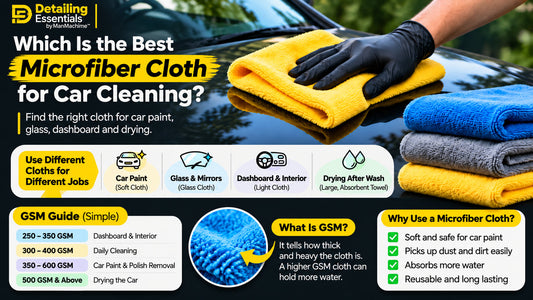
A microfiber towel is a soft cloth made to pick up water. A good car drying towel can hold much more water than a normal cleaning cloth.
After rinsing your car, place the towel on the wet roof or bonnet. Pull it gently across the surface without pressing hard. The towel will pick up the water as it moves.
For most people, this is the easiest way to dry a car. A towel takes up very little space and does not need electricity. It also works well when you want to finish washing your car quickly.
There is one thing you must take care of: the towel should always be clean. If it has sand or dirt stuck in it, wiping the paint may leave small marks. Don't use the same towel for the wheels and the car body.
If you need a proper drying cloth, you can check the Microfiber Towels for Car Cleaning collection at Detailing Essentials.
Car Air Blower vs Microfiber Towel: Main Differences
Here is a simple comparison to help you choose.
|
What You Need |
Car Air Blower |
Microfiber Towel |
|
Drying the roof and bonnet |
Takes more time |
Usually quicker |
|
Water behind mirrors |
Works well |
Hard to reach |
|
Small gaps and car badges |
Works well |
Not as easy |
|
Touching the car paint |
Little or no contact |
Touches the paint |
|
Electricity |
Needed for powered models |
Not needed |
|
Noise |
Makes noise |
No noise |
|
Storage |
Needs more space |
Easy to keep anywhere |
|
Cost |
Usually costs more |
Usually costs less |
|
Regular home car wash |
Helpful but not necessary |
Good choice |
Which Tool Should You Buy?
If you wash your car once or twice a week at home, start with a good microfiber drying towel. It is simple to use and can handle most of the drying work.
If you have a large SUV, a car with many small gaps or water that keeps dripping from the mirrors, an air blower may make the job easier.
You don't need to buy both tools immediately. Choose what solves the problem you face when drying your car.
Is an Air Blower Better for a Ceramic Coated Car?
Have you noticed how water forms small drops on some cars? This often happens on cars with a ceramic coating. The coating can make it easier for water to roll off the paint.
An air blower may work well on these cars because it can push many of those water drops off the surface. You may not need to wipe the paint as much.
But this doesn't mean you cannot use a microfiber towel. A clean, soft towel can still dry any water left behind. Just don't rub the paint hard.
Also, remember that a ceramic coating does not stop all scratches. Wash the car properly before drying it, and follow the care advice given by your coating installer.
How to Dry a Car Without Water Spots
Water spots are the small marks left behind when water dries on the car. They can appear quickly in hot weather, especially if the water contains a lot of minerals.
You can reduce these marks by drying your car in the right way.
Step 1 – Wash Your Car in the Shade
Try not to wash your car under strong sunlight. When the bonnet and roof are hot, water can dry before you get a chance to wipe it away.
Morning or evening is often a better time for washing. A shaded place also gives you more time to finish the work.
Step 2 – Rinse Off All the Shampoo
Make sure there is no shampoo left on the car before you start drying. Check the roof, mirrors, front grille, wheels and lower parts of the doors.
If you find dirt or soap on any area, wash it off first. Don't try to remove dirt by rubbing it with a drying towel.
Step 3 – Start from the Roof
It is easier to dry the car from top to bottom. Start with the roof and windows, then move to the bonnet and doors.
Water from the top can run down onto the lower parts of the car. Working in this order saves you from drying the same area again and again.
Step 4 – Remove Water from Small Gaps
Look closely at the side mirrors, door handles, badges and front grille. These are the places where water often gets stuck.
If you have a car air blower, use it to move the water out of these gaps. Keep the nozzle away from the body and don't let it touch the paint.
Step 5 – Dry with a Microfiber Towel
Now take a clean microfiber towel and gently dry the larger areas. Place the towel on the wet surface and pull it slowly without pressing hard.
If the towel becomes too wet, use another dry section or change it. Don't continue wiping with a towel that has picked up dirt.
Step 6 – Check the Car One More Time
Before you finish, look under the side mirrors and around the door handles. A few drops may still come out even after the car looks dry.
Use a clean towel to pick up that water. It takes only a little extra time but can help you avoid marks later.
Common Mistakes People Make While Drying a Car
Some drying mistakes are easy to make, especially when you want to finish the wash quickly.
Using an old towel: A towel used for other household jobs may have dirt stuck in it. Use a clean microfiber towel made for drying cars.
Drying in strong sunlight: The water may dry before you can remove it. Try to wash and dry your car in the shade.
Using the same cloth for wheels and paint: Wheels collect dirt and brake dust. Keep a separate cloth for them.
Rubbing the paint too hard: You don't need much pressure. A soft, clean towel should be able to pick up water without hard rubbing.
Putting the blower nozzle too close: The nozzle may touch the paint or trim if you are not careful. Keep a safe distance and move it slowly.
Forgetting the mirrors: You may dry the whole car and still find water running down from a mirror later. Check these small areas before you finish.
Dark-coloured cars can show small marks more clearly. If you have a black car, read our guide on Why Black Cars Get Swirl Marks and How to Reduce Them.
When Should You Use a Car Drying Blower?
A car drying blower is helpful when you often find water left behind after washing. This usually happens around mirrors, grilles, badges, door handles and wheel gaps.
It can also be useful for cars with ceramic coating, where water often forms drops that are easier to move with air.
If you run a car detailing studio, a blower can help remove hidden water before polishing or other paint care work. Water coming out of small gaps during the job can be annoying and may affect the work area.
One option is the MaxShine Mini Handheld Car Dryer Air Blower 1200W. It is made for car drying and comes with two nozzles for directing air into smaller areas.
Before buying a blower, check its power needs, size and instructions. If you only wash one small car at home, a good microfiber towel may already be enough.
Can You Use a Car Air Blower and Microfiber Towel Together?
Yes. You don't have to choose only one.
After washing the car, use the blower around the mirrors, door handles, badges and other small gaps. This helps remove water that may drip out later.
Then take a clean microfiber towel and dry the bonnet, roof, doors and windows. The towel can pick up the water left on the larger areas.
Check the car once more before finishing. If you see a few drops near the mirrors, wipe them away with a clean part of the towel.
This method is helpful when you want to dry the whole car carefully. But for a quick home wash, using only a microfiber towel is also fine.
Frequently Asked Questions
1. Can a car air blower scratch the paint?
A blower does not need to touch the paint, so there is less wiping. Still, you must be careful. Don't let the nozzle hit the car, and don't blow loose sand across the paint. Wash and rinse the car properly before drying it.
2. Can I use a microfiber towel on a black car?
Yes. Make sure the towel is clean and soft. Black paint shows small marks easily, so don't press hard or use a towel that has dirt stuck in it.
3. Can an air blower remove water spots?
A blower can help stop water spots by pushing water away before it dries. But if the marks are already on the paint, air alone will not remove them. You may need a suitable car cleaning product.
4. Do I need a microfiber towel if I already have a car dryer machine?
Keeping a towel is still a good idea. A blower works well around mirrors and small gaps, while a towel is often easier for the roof and doors. Using both can help you finish the job.
5. Can I use a normal leaf blower to dry my car?
Some people use one, but it may not be made for car drying. A car drying blower may have a filter and nozzles that are better suited to this work. Whatever you use, check that the machine is clean and follow its safety instructions.
6. Should I dry my car immediately after washing?
It's better to dry the car soon after the final rinse. Water can leave spots if it stays on the paint and dries in the sun. Try to finish the job while the car is still wet.
Final Verdict – Car Air Blower or Microfiber Towel?
For most people washing their cars at home, a microfiber towel is a good choice. It is easy to use, costs less and dries large parts of the car quickly.
A car air blower is better for removing water from places like side mirrors, grilles and badges. It is also helpful if you want to touch the paint less while drying.
If you have both, use the blower for small gaps and the towel for large areas. You don't need expensive tools to dry your car properly. Clean equipment and the right method matter more.
Find Car Drying Tools at Detailing Essentials
If you need a drying towel or a car air blower, choose one that suits your car and how often you wash it. You can explore Car Drying Blowers and other car care tools at Detailing Essentials.
You can also read our Car Cleaning Tools Guide to learn about other tools used for washing and cleaning a car.
Tags:
Previous
Car Plastic Protectant Guide for Faded Car Plastic
Next
Alloy Wheel Cleaner Guide to Remove Brake Dust Safely