
Dashboard Polish for Car How to Use It Without Sticky Shine and Dust
Dashboard Polish for Car How to Use It Without Sticky Shine and Dust
Your dashboard looks dull, dusty or faded, so you apply polish to make it look fresh again. But after a few hours, the surface may feel oily, collect dust or reflect too much light on the windshield.
This usually happens because dashboard polish is being used in the wrong way. Dashboard polish is mainly a finishing product. It should normally be used after the dashboard has already been cleaned.
The simple rule is easy to remember. If the dashboard is dirty, clean it first. If it is already clean but looks dull, then use a suitable dashboard polish or dressing. For most cars, a thin and even layer gives a better result than a heavy wet layer.
Detailing Essentials offers dashboard care and interior cleaning products for DIY car owners and professional detailers who want a clean, controlled finish without unnecessary product buildup.
Quick Answer
Dashboard polish should be used on a clean and dry dashboard. First remove dust and oily marks with an interior cleaner. Then put a small amount of polish on a clean microfiber towel or applicator and spread it evenly.
Do not put dashboard polish on the steering wheel, pedals or other areas where you need good grip. Do not use it on touchscreens unless the product clearly says it is safe for screens. If the dashboard already looks clean and fresh after cleaning, you may not need polish at all.
What Does Dashboard Polish Do
Dashboard polish is mainly used to improve the look of suitable plastic, vinyl and interior trim. Depending on the product, it may leave a natural, satin or glossy finish.
Some products are also sold as dashboard dressing, dashboard shiner or plastic dressing. These names can be different, but the basic idea is similar. They are used after cleaning to improve the final look of the surface. Not every product works on every material. Always check the label before using it on plastic, vinyl, rubber, leather or any other surface.
Dashboard Cleaner and Dashboard Polish Are Not the Same
This is one of the most important points to understand. A dashboard cleaner is used to remove dust, fingerprints, body oil and old product from the surface. Dashboard polish is used after cleaning when you want to improve the final look.
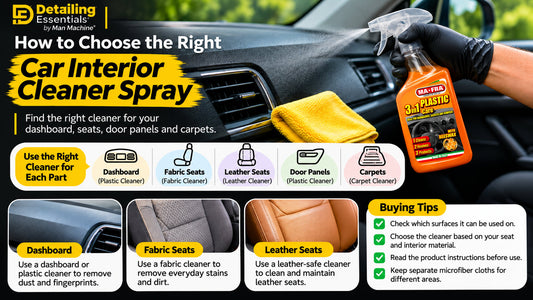
If your dashboard is dirty, start with a suitable Car Interior Cleaner Spray. Clean the surface properly and let it dry before deciding whether polish is needed. Putting polish over dirt can make the dashboard look darker for a short time, but the dirt is still there. It can also create an uneven or sticky finish.
At Detailing Essentials, dashboard cleaning and finishing products are separated by use, so you can choose a cleaner first and then select a suitable polish or dressing only when the surface needs it.
Why Dashboard Polish Becomes Sticky
The most common reason is using too much product. A thick layer can sit on top of the dashboard instead of leaving a clean and even finish.
Old polish can also build up when new product is added again and again without cleaning the previous layer. Over time, the dashboard may begin to feel greasy and dust can become more visible.
If your dashboard already feels sticky, do not add another coat. Clean the surface first, remove the old residue and start again with a small amount.
Why Dashboard Polish Attracts Dust
Dashboard polish does not always attract dust, but excess product left on the surface can make dust much easier to see.
This is common when the product has been sprayed too heavily or has not been wiped properly. A very oily surface can quickly look dirty again, especially in dusty Indian driving conditions.
Use only enough product to cover the surface. If the instructions say to wipe away extra polish, use a clean microfiber towel and remove the excess.
A dry and even finish is usually easier to maintain.
How to Use Dashboard Polish Correctly
Start by parking the car in shade if possible. A dashboard can become very hot when the car is parked under direct sunlight, especially during Indian summer.
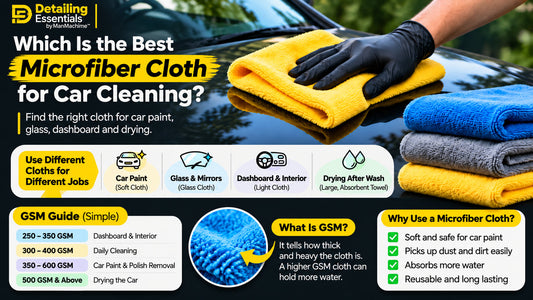
Remove loose dust with a clean microfiber towel or soft interior brush. If the dashboard has fingerprints, oily marks or old dressing, clean it with a suitable interior cleaner.
Let the surface dry. Then apply a small amount of Dashboard Polish for Car to a clean applicator or microfiber towel when the product instructions allow this method.
Spread the polish over a small area. Keep the layer thin and even. Check the finish from different angles and wipe away extra product if required.
Do not keep adding more polish just because one area is not very shiny. First make sure the surface is clean and the product has been spread properly.
Should You Spray Dashboard Polish Directly
Direct spraying can work with products that are made for that method, but it gives you less control around glass, screens and buttons.
For many jobs, applying the product to a clean microfiber towel or foam applicator first can make application easier. It helps you control where the polish goes and reduces unwanted spray on nearby surfaces.
Always follow the product label because application instructions can change from one product to another.
Matte Finish or Glossy Finish Which Is Better
There is no single finish that is best for every car. A matte or natural finish keeps the dashboard looking close to its original appearance. A satin finish gives a little more depth without looking very shiny. A glossy finish creates a stronger shine.
For the top of the dashboard, a natural or satin finish can be more practical because very shiny surfaces may create more reflection on the windshield.
If you drive every day, choose a finish that looks clean and is comfortable to live with rather than simply choosing the highest shine.
Can Dashboard Polish Reduce Windshield Visibility
Dashboard polish should not be used on the windshield. The main problem is reflection. A very shiny dashboard can reflect light into the windshield and become distracting in bright conditions.
This is why a low-shine or satin finish is often easier to use on the upper dashboard.
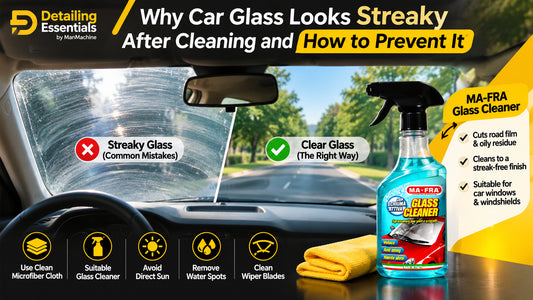
Also keep dashboard towels separate from glass towels. A towel carrying oily polish can leave marks on the windshield.
Can Dashboard Polish Be Used on the Steering Wheel
In general, avoid leaving dashboard dressing on the steering wheel. The steering wheel is a control surface and needs good grip. A product that leaves the surface smooth or oily can make it uncomfortable to hold.
Clean the steering wheel with a product made for its material instead. If it is leather, use a method suitable for leather. If it is plastic or another material, follow the correct care instructions for that surface.
Do not choose shine over grip.
Can Dashboard Polish Be Used on Pedals
No dressing that can leave a slippery finish should be used on brake, accelerator or clutch pedals. These areas need grip. If polish accidentally reaches a pedal, clean the area properly before driving.
This is also why spraying dashboard polish across the complete cabin is not a good idea. Controlled applications are safer and cleaner.
Can Dashboard Polish Be Used on Touchscreens
Do not assume normal dashboard polish is safe for an infotainment screen. Modern screens may have special surface coatings. A normal polish can leave smears or residue and may not be made for electronic displays.
Use a screen-safe cleaner or follow the vehicle maker's cleaning instructions. If the dashboard polish clearly says it is safe for a particular screen surface, follow the product directions carefully.
When you are not sure, keep the polish away from the screen.
Can Dashboard Polish Be Used on Gloss Black Plastic
Gloss black trim needs gentle care because it shows fingerprints and light marks very easily.
Do not treat it exactly like rough dashboard plastic. Use a soft, clean microfiber towel and a product that is suitable for glossy trim. A dressing made for textured plastic may leave visible residue on a high-gloss panel, so always check surface compatibility first.
Can Dashboard Polish Be Used on Leather
Only use dashboard polish on leather when the product clearly says leather is a suitable surface. Leather needs different care from normal dashboard plastic. If the seat or trim is leather, clean it with a leather-safe product and use the correct leather care afterward.
Do not assume that a product made for plastic is automatically safe for leather.
Can Dashboard Polish Be Used on Fabric Seats
No. Dashboard polish is not a fabric cleaner. Fabric seats, floor mats and carpets collect dust and dirt inside the fibres and need a different cleaning method. Vacuum them first and then use a suitable Car Upholstery Cleaner if deeper cleaning is required.
Avoid soaking the fabric. Use only enough cleaner for the job and allow the material to dry properly afterward.
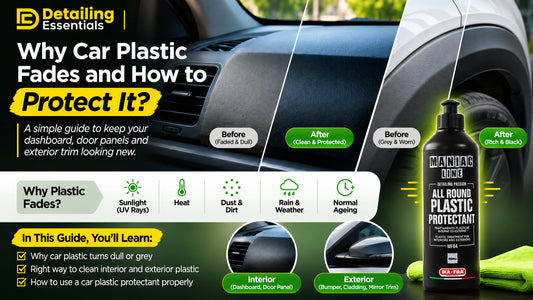
What Is Car Plastic Protectant
A plastic protectant and dashboard polish can sometimes have similar uses, but they are not always the same product. Some dashboard polishes mainly focus on the final look, while some plastic protectants are made for wider plastic, vinyl or rubber care. The exact use depends on the formula.
If you are treating plastic trim beyond only the dashboard, compare a suitable Car Plastic Protectant and check which surfaces the product supports.
Always choose by surface and product instructions, not only by the product name.
What If the Dashboard Is Already Sticky
If the dashboard is sticky because of old polish, do not add another layer. First remove loose dust. Then clean a small area with a compatible interior cleaner and see whether the sticky residue begins to come away. You may need more than one light cleaning pass if several layers of old product have built up.
Once the dashboard feels clean and dry, decide whether it needs any dressing at all. If you use polish again, apply much less.
What If the Dashboard Looks White or Faded
First clean the surface properly because old cleaner, dust or dried product can sometimes make plastic look uneven.
If the plastic is physically faded from age or heat, a suitable dressing may improve how it looks, but polish cannot repair damaged plastic. Cracks, peeling surfaces and broken trim need repair rather than more polish. A detailing product can improve appearance, but it cannot fix physical damage.
Should a New Car Dashboard Be Polished
A new car may not need dashboard polish. If the dashboard already looks clean and even, normal dust removal and gentle cleaning may be enough. Adding several products to a new dashboard can create unnecessary buildup.
Use polish only if you want a particular finish and the product is suitable for the material.
How Often Should Dashboard Polish Be Used
There is no fixed number of days that works for every product and every car.
The need depends on the type of polish, how much sun the car receives, how dusty the area is, how often the interior is cleaned and the finish you want.
Clean the dashboard when it is dirty. Reapply polish only when the finish has faded and the product instructions say it can be reapplied.
Do not apply polish during every wash just because it is available.
Dashboard Care in Indian Summer
The top of a dashboard can become very hot when a car is parked outside in Indian summer. Try to clean and polish the dashboard when the surface is cool. Park in shade and allow the cabin to cool before application. A hot surface can make some products harder to spread evenly.
Heat and strong sunlight also make a low-glare finish more useful for daily driven cars.
Dashboard Care in Dusty Indian Cities
Dust is one of the biggest interior problems for cars used regularly in busy cities. If you live or drive in an area with a lot of dust, applying a heavy oily layer can make the dashboard look dirty quickly. Regular light dusting with a clean microfiber towel can reduce the need for frequent polish.
When deeper cleaning is needed, clean the surface properly before applying another finishing product.
Dashboard Care During the Monsoon
During monsoon months, the cabin can collect damp dirt, wet hand marks and mud from footwear. Dashboard polish should not be used to hide this dirt. Clean the dashboard first and use only a controlled amount of product after the surface is dry.
Fabric mats and seats may also take longer to dry during humid weather, so good airflow inside the car becomes important.
What Should Professional Detailers Do
A detailing studio should use the same clear process for every vehicle. First vacuum the cabin, then remove dust, clean the correct surfaces and inspect the interior. Dashboard dressing should come near the end of the process.
For a detailing studio or car wash franchise, using one clear process also helps different workers give customers a more consistent result.
Do not make every dashboard extremely shiny. Ask what finish the customer wants and choose the right product for that surface.
Why Vacuuming First Gives Better Results
Dust does not stay only on the dashboard. It also falls into seats, carpets, cup holders and small gaps. Before using liquid cleaner, remove as much dry dirt as possible.
A Wet and Dry Vacuum Cleaner for Car can help clean carpets, seat gaps and floor areas before the wet cleaning stage. This also stops loose dirt from becoming muddy when liquid cleaner is later used inside the car.
What Should You Check Before Buying Dashboard Polish
First check which surfaces the product is made for. Do not assume it can be used on every part of the interior. Next, look at the finish. Decide whether you want natural, satin or glossy.
Check whether the product is meant mainly for plastic, vinyl, rubber or several surfaces. Also read how it should be applied and whether extra product needs to be wiped away.
If you have a modern car with many screens and gloss panels, check those surfaces separately rather than using one product everywhere.
When choosing from Detailing Essentials, check the surface type, finish level and application instructions before buying. This helps you choose between a cleaner, dashboard polish and plastic protectant instead of using one product for every interior surface.
Common Dashboard Polish Mistakes
The first mistake is using polish over a dirty dashboard. This hides the problem for a short time instead of cleaning it. The second mistake is using too much product. This can make the surface sticky and can make dust more noticeable. Another mistake is spraying polish near the steering wheel, pedals, touchscreen or windshield. These surfaces need different care.
Using the same towel for dashboard polish and glass cleaning can also create oily marks on the windshield. Keeping the process simple prevents most of these problems.
Best Simple Dashboard Care Routine
Start by removing dust with a clean microfiber towel or soft brush. If the dashboard has oily marks or old polish, clean it with a suitable interior cleaner. Let the surface dry fully.
If the dashboard already looks clean and fresh, stop there. If it looks dull and you want a finished look, apply a small amount of suitable dashboard polish. Spread it evenly, wipe away extra product when required and inspect the surface in normal light.
That is usually enough.
Dashboard Care Products at Detailing Essentials
Detailing Essentials offers dashboard cleaners, interior cleaners, plastic care products and dashboard finishing products for both home users and professional detailers. If you want to clean the dashboard first and then improve the final finish, explore the Dashboard Care range and choose a product according to the surface, finish and application method.
The right product should match the material and the result you actually want. A clean natural finish is often more useful than simply choosing the strongest shine.
Final Thoughts
A dashboard polish for a car should make the interior look clean and finished, not sticky or overly oily. The best result starts with cleaning. Remove dust, fingerprints and old polish before applying a fresh layer. Use only a small amount and keep the product away from the steering wheel, pedals and screens unless the label clearly says those surfaces are safe. For daily cars, a natural or satin finish can be easier to maintain than heavy gloss, especially in hot and dusty Indian conditions.
Detailing Essentials recommends choosing dashboard products according to the surface, desired finish and application method rather than using one product across the complete interior.
The simple rule is easy to remember. Clean first, let the dashboard dry, use a small amount of polish and stop when the surface already looks good.
Frequently Asked Questions
Is dashboard polish good for a car
Yes. Dashboard polish can improve the look of suitable plastic or vinyl surfaces when used correctly. Clean the dashboard first and make sure the polish is made for that surface.
What is the difference between dashboard cleaner and dashboard polish
Dashboard cleaner removes dirt, fingerprints and old residue. Dashboard polish is normally used after cleaning to improve the final look of suitable dashboard surfaces.
How do I use dashboard polish correctly
Clean and dry the dashboard first. Apply a small amount to a clean applicator or microfiber towel, spread it evenly and wipe away extra product if the instructions tell you to do so.
Why does dashboard polish attract dust
Too much product or leftover oily residue can make dust more noticeable. Use a thin layer and remove extra polish instead of leaving the dashboard wet.
Can dashboard polish be used on the steering wheel
It is better to keep slippery dressing away from steering wheels because they need good grip. Use a cleaner suitable for the steering wheel material.
Can dashboard polish be used on a touchscreen
Only if the product clearly says it is safe for that type of screen. Otherwise, use a dedicated screen-safe cleaner.
Can dashboard polish be used on leather seats
Only when the product clearly lists leather as a suitable surface. Otherwise, use dedicated leather cleaning and care products.
Should I use dashboard polish every time I clean my car
No. Clean the dashboard when needed and apply polish only when the finish needs refreshing. There is no need to add another layer when the dashboard already looks good.
Which is better matte or glossy dashboard polish
It depends on the look you want. A natural or satin finish usually creates less windshield reflection, while a glossy product creates a stronger shine.
Why is my dashboard still sticky after polishing
You may have used too much product or applied fresh polish over old residue. Clean the surface properly, let it dry and use a much smaller amount next time.
Tags:
Previous
Why Car Glass Looks Streaky After Cleaning and How to Fix It
Next
Car Plastic Protectant Guide for Faded Car Plastic