
Hard Water Spot Remover for Car That Helps Remove Mineral Marks
Hard Water Spot Remover for Car to Remove Stubborn Mineral Marks
You finish washing your car and the paint looks clean.
A few minutes later, white circles or cloudy marks start appearing on the bonnet, roof or glass.
You wash the area again, but the marks are still there.
This usually means you are dealing with more than normal dust or road dirt.
A hard water spot remover for car surfaces can help when minerals from dried water remain on the paint or glass.
But every water mark does not need the same treatment.
Some marks disappear during a normal wash.
Some need a mineral remover.
Others may have already affected the paint and need polishing.
The first job is to understand what type of mark you are looking at.
First Check What Kind of Water Mark You Have
Before choosing a cleaner, look at the spot properly.
Water marks can be at different stages.
You may have
-
Fresh dried water marks
-
Mineral deposits
-
Heavy hard water scale
-
Marks that have already affected the paint
The treatment changes depending on the condition.
Using a strong product without checking the surface first can create unnecessary work.
Why Water Spots Stay Even After Washing
Water can contain dissolved minerals.
When a water droplet dries, the water disappears but some of the minerals remain on the surface.
These deposits may look like
-
White circles
-
Chalky marks
-
Cloudy patches
-
Rough mineral spots
-
Rings left by dried water
They are often visible on
-
Bonnet
-
Roof
-
Windscreen
-
Side glass
-
Mirrors
-
Boot lid
Normal washing removes general dirt.
It may not remove minerals that have already dried onto the surface.
Three Levels of Water Spots You Should Know
Fresh Water Marks
Fresh marks may come off during a normal wash.
If shampoo removes them, there is no need to use a stronger product.
Mineral Deposits on the Surface
These marks remain after washing.
They may look white, cloudy or chalky.
The surface can also feel slightly rough.
This is where a suitable hard water spot remover can help.
Marks Left in the Paint
Sometimes the mineral deposit is removed but a faint ring is still visible.
The surface feels clean and smooth, but the mark remains under good light.
This may mean the paint itself has been affected.
More cleaner may not help.
Polishing may be required.
Which Product Should You Use
| Condition | Better Starting Point |
|---|---|
| Fresh water marks | Normal car shampoo |
| Mineral film across several panels | Suitable descaling wash |
| Visible mineral rings | Hard water spot remover |
| Clean surface but mark remains | Inspect for polishing |
| Deep or unclear marks | Professional inspection |
This makes the process easier.
You do not need to jump directly from shampoo to heavy paint correction.
Why Regular Car Shampoo Has Limits
Car shampoo is made for normal cleaning.
It helps remove
-
Dust
-
Mud
-
Road grime
-
Loose dirt
A bonded mineral deposit is different.
Once water has dried and minerals remain on the surface, washing the area again may clean the surrounding paint without removing the spot.
Do not keep adding more shampoo.
Do not scrub harder.
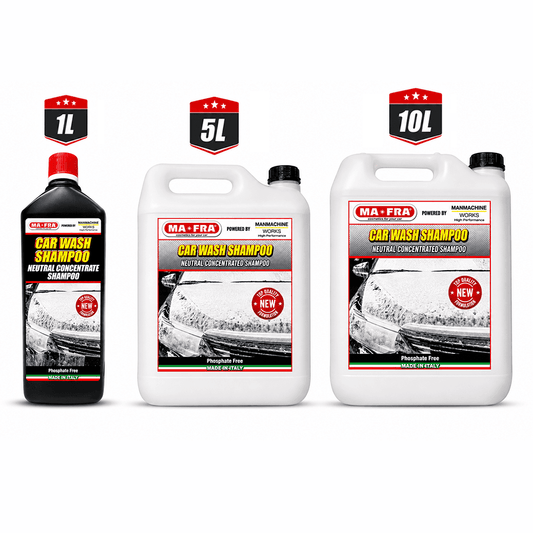
Use a suitable car wash shampoo first and inspect the surface after washing.
If the mineral mark remains, move to the next step.
Where a Hard Water Spot Remover Fits
A water spot remover is made for mineral contamination rather than normal dirt.
Depending on the product, it may be suitable for
-
Paint
-
Glass
-
Mirrors
-
Chrome
-
Other approved exterior surfaces
Before using any product, check
-
Surface compatibility
-
Application method
-
Dilution instructions
-
Working time
-
Rinsing instructions
-
Coating compatibility
Do not assume every water spot remover works in the same way.
How to Remove Water Spots From Car Paint
Step 1 Wash the Car
Remove loose dirt before using a mineral remover.
Do not apply the product directly over dusty or muddy paint.
Step 2 Dry the Panel
Dry the area properly.
Water on the panel can hide some of the marks.
A dry surface makes inspection easier.
Step 3 Inspect the Spot
Look at the panel under good light.
Check whether
-
The spot still looks white
-
The surface feels rough
-
Shampoo made any difference
-
The ring looks like it is sitting on the surface
-
The surface feels clean but the ring remains
This helps you decide what to do next.
Step 4 Use a Suitable Mineral Remover
If the mark is still a mineral deposit, use a product made for that job.
You can check the hard water spot remover for car range for suitable products.
Follow the instructions provided with the product.
Step 5 Inspect the Paint Again
After treatment, clean or rinse the surface as directed.
Dry it and inspect it again.
If the mark has disappeared, stop there.
If the surface feels clean but the mark remains, the problem may now be in the paint.
Know When to Stop Using Cleaner
This is an important part of the process.
A mineral remover is made to remove mineral contamination.
It cannot repair every defect in the paint.
Stop applying more chemical when
-
The white residue is gone
-
The surface feels smooth
-
The panel is clean
-
Only a faint ring remains
At this point, stronger chemical treatment may not improve the result.
The paint may need correction.
When Polishing Becomes the Better Option
Polishing may be needed when the mineral deposit is gone but the mark remains in the paint.
Common signs include
-
The ring stays after mineral removal
-
The area feels smooth
-
The mark is easy to see under direct light
-
Repeated cleaning does not improve it
Do not start with the strongest compound.
A better approach is to inspect the paint and test a mild correction method first.
Increase the cutting level only if needed.
The aim is to correct the defect without removing more paint than necessary.
Water Spots on Car Glass Need a Different Check
Glass is one of the most common places where water marks become visible.
You may see them on
-
Windscreen
-
Side windows
-
Mirrors
-
Sunroof
Start with normal glass cleaning.
If the marks remain, use a water spot remover only when the product is approved for automotive glass.
A product that works on paint should not automatically be used on glass.
Water Spots on Ceramic Coated Cars
Ceramic coating does not completely stop mineral deposits.
Water can still dry on top of a coated surface.
Before using a remover on a coated car, check
-
Whether the product is safe for coatings
-
The coating maintenance instructions
-
Whether strong chemical treatment is actually required
Avoid polishing unless the paint really needs correction.
Polishing may reduce or remove the coating in that area.
Hard Water Spot Remover and Descaling Shampoo Do Different Jobs
Both products can deal with mineral contamination, but their use can be different.
Use a Descaling Shampoo When
Mineral film is spread across a larger part of the car.
For example
-
Most of the roof looks cloudy
-
Several panels have light mineral buildup
-
The complete vehicle needs a mineral cleaning wash
Use a Targeted Water Spot Remover When
The marks are limited to certain areas.
For example
-
A few spots on the bonnet
-
Mineral marks on side glass
-
Rings around mirrors
-
A small patch on the roof
A targeted product can make more sense when the whole car does not need treatment.
Hard Water Spot Remover and Iron Remover Are Not the Same
These products solve different problems.
A hard water spot remover is used for mineral deposits left by dried water.
An iron remover is used for iron contamination and brake related particles.
If white or cloudy rings appear after water dries, the problem may be mineral related.
Choose the chemical according to the contamination rather than using whatever product is already available.
Should You Use Household Vinegar
You may find many home remedies online that suggest vinegar.
The bigger question is not only whether vinegar can react with minerals.
You also need to think about the surface.
Cars may have
-
Paint
-
Ceramic coating
-
Plastic trim
-
Chrome
-
Wrap
A dedicated automotive product provides clearer instructions for surface compatibility, application and working time.
That makes it easier to control the job.
Why Hard Water Spots Keep Coming Back
Removing the old marks does not remove the cause.
New spots can return when
-
The same mineral rich water is used
-
The car is left to dry naturally
-
Water keeps dripping from mirrors
-
The vehicle is washed on very hot panels
-
Drying takes too long
If the marks return after every wash, look at the washing and drying process before changing products again.
A Better Wash Routine for Hard Water Areas
Wash on Cooler Panels
Hot panels make water dry quickly.
Working in shade or on cooler paint gives you more time.
Dry the Car After Rinsing
Do not leave the full vehicle wet and wait for it to dry naturally.
Check Water Traps
Water can remain around
-
Mirrors
-
Door handles
-
Badges
-
Window seals
-
Grilles
Remove this water before it drips onto already dried paint.
Work in Smaller Areas During Hot Weather
If water is drying too quickly, work section by section.
Treat Fresh Marks Early
Fresh mineral deposits are generally easier to remove than old buildup.
Hard Water Problems in Indian Car Care
Water quality can change from one area to another.
Some homes and detailing studios use municipal water.
Others may depend on
-
Borewell water
-
Tanker water
-
Mixed water supply
Hot weather can make the problem more noticeable because water dries faster on exposed paint.
During monsoon months, dirty rainwater and road splash can also sit on the vehicle and dry later.
The practical approach is simple.
Wash the vehicle first.
Dry it properly.
Then treat only the marks that remain.
How to Choose the Right Hard Water Spot Remover
Do not choose only by price or by how strong the cleaner sounds.
Start with the surface and the problem.
Check the Surface
Make sure the product is suitable for
-
Paint
-
Glass
-
Mirrors
-
Chrome
-
Other exterior materials
Check the Type of Mark
Find out whether you have
-
Fresh water marks
-
Mineral buildup
-
Heavy scale
-
A mark left in the paint
A chemical cleaner cannot fix every etched paint defect.
Check How the Product Is Used
Look for
-
Ready to use or concentrated formula
-
Application method
-
Working time
-
Rinsing requirement
-
Follow up cleaning
Check Existing Protection
If the vehicle has wax, sealant or ceramic coating, check compatibility before use.
Simple Buying Checklist
Before buying a hard water spot remover for car, ask
-
Did normal shampoo remove the mark
-
Is mineral residue still visible
-
Am I treating paint or glass
-
Is the product made for that surface
-
Does the vehicle have a coating
-
Is the product ready to use or concentrated
-
Does it need rinsing
-
Is the problem limited to one area or spread across the car
-
Is the mineral still sitting on the surface
-
Is the remaining mark already in the paint
These questions make product selection much easier.
Mistakes That Can Make Water Spots Worse
Rubbing Too Hard
Extra pressure does not replace the correct cleaner.
Using Rough Pads
A rough cleaning pad can create scratches.
Letting the Product Dry
Follow the working time given by the manufacturer.
Mixing Chemicals
Do not mix detailing chemicals unless the manufacturer clearly allows it.
Polishing Too Early
Remove the mineral contamination first.
Only consider polishing when the mark remains after the surface is clean.
Repeating Chemical Treatment Too Many Times
If the mineral deposit is gone but the mark stays, stronger cleaner may not help.
DIY Treatment and Professional Help
DIY Treatment Makes Sense When
-
The marks appear to be surface deposits
-
You can wash the vehicle properly
-
You have a product made for the surface
-
You can follow the instructions correctly
Professional Help Makes Sense When
-
The marks remain after mineral removal
-
A large area is affected
-
The paint looks etched
-
The car has a coating and you are unsure what is safe
-
Machine polishing may be needed
Knowing when to stop is better than repeatedly testing stronger products on the paint.
FREQUENTLY ASKED QUESTIONS
Why are hard water spots still visible after washing
Normal car shampoo removes everyday dirt but may not remove mineral deposits that have dried onto the surface. Older marks may need a dedicated water spot remover.
Can a hard water spot remover be used on car paint
Yes, when the product is specifically made for automotive paint. Always check the product instructions before use.
Can the same water spot remover be used on glass
Only when the product is approved for automotive glass. Paint and glass should not automatically be treated with the same product.
Why is a water spot still visible after using a remover
If the mineral deposit is gone but the ring remains, the paint may have been affected. Polishing may be required.
Can ceramic coated cars get hard water spots
Yes. Mineral rich water can still dry on top of a coating. Use a coating compatible cleaner.
How can hard water spots be reduced after washing
Dry the car after rinsing, avoid very hot panels when possible and remove trapped water from mirrors, handles, badges and seals.
Final Thoughts
A hard water spot remover for car is useful when regular washing leaves mineral marks behind.
But do not treat every water mark in the same way.
Wash the vehicle first.
Dry the paint.
Inspect what remains.
If mineral residue is still on the surface, use the right remover.
If the surface becomes clean but the ring is still visible, stop using stronger chemicals.
The paint may need polishing instead.
A simple process works well.
Wash the car
Dry the surface
Inspect the marks
Remove mineral deposits
Inspect again
Polish only if needed
Tags:
Previous
Car Detailing Franchise in India- Business Model, Setup Requirements and Franchise Opportunities
Next
Car Glass Coating Guide for Windshield Water Repellency